

Swiss G permit for cross-border workers: employer guide
A practical employer guide to Swiss G permits for cross-border workers who live abroad and work in Switzerland.

Fenja Brockmann
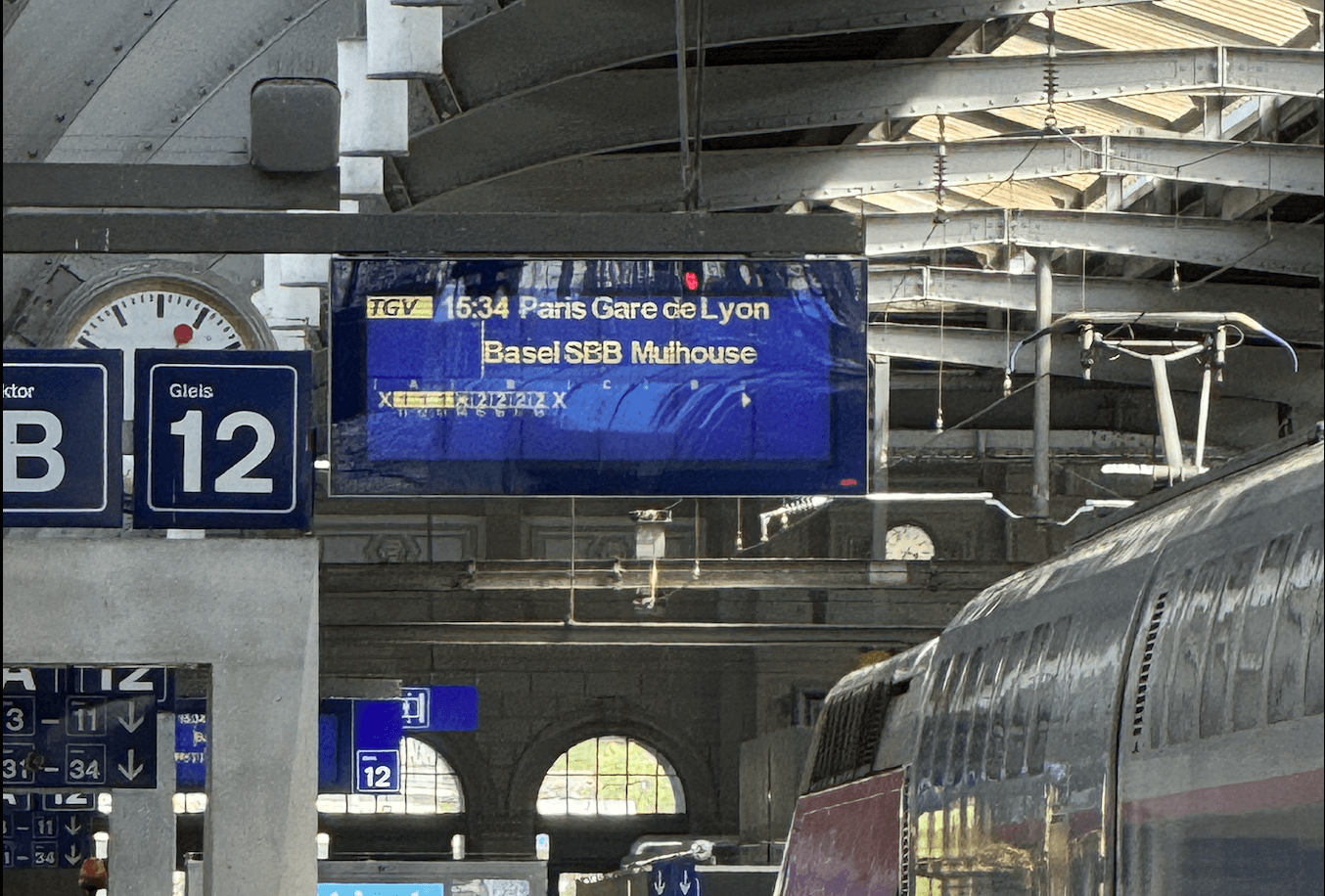
A practical employer guide to Swiss G permits for employees who work in Switzerland but live abroad and return home regularly.
Short answer
A Swiss G permit is for a cross-border worker: someone who works in Switzerland but keeps their main home abroad and returns there regularly, usually at least once a week. It can be a good route when the employee lives in France, Germany, Italy, Austria, or another EU/EFTA country and commutes to Switzerland. But it is not a relocation permit. Employers should check nationality, residence abroad, weekly return pattern, Swiss work location, payroll, withholding tax, social security, health insurance, and remote-work plans before choosing the G route.
💡 Check the Swiss hire feasibility. Permitree gives employers the likely Swiss route, timeline, document checklist, costs, risks, and process overview before they move into the full hiring or mobility case.
G permit in one minute
The G permit is the Swiss cross-border commuter permit. It is for people who work in Switzerland but do not move their main residence to Switzerland.
In simple terms:
B permit: the person lives and works in Switzerland
L permit: the person temporarily lives and works in Switzerland
G permit: the person works in Switzerland but lives abroad and returns home regularly
For employers, the G permit can be useful when a candidate lives near Switzerland and wants to keep their home abroad. But it creates extra questions around tax, social security, health insurance, remote work, and commuting.
Quick employer snapshot
Question | Employer answer | What to check |
|---|---|---|
Who is it for? | A person who works in Switzerland but lives abroad. | Residence address, nationality, and weekly return pattern. |
Does the person relocate? | No. A G permit is not a Swiss residence permit for living in Switzerland. | If the person wants to move to Switzerland, check B or L instead. |
EU/EFTA worker | Usually easier because of free movement. | Residence in an EU/EFTA state, Swiss employment, and regular return abroad. |
Non-EU/EFTA worker | Much harder and more restricted. | Permanent residence in a neighbouring state, border-zone rules, labour-market checks, and canton rules. |
Remote work abroad | May affect social security, tax, and employer registration. | Check telework percentage before agreeing to hybrid work. |
Who can use a G permit?
A G permit may be relevant when all of these are true:
the person works for a Swiss employer or works in Switzerland
the person keeps their main residence outside Switzerland
the person returns to that residence regularly, usually at least once a week
the Swiss work location and foreign residence support the cross-border route
the person meets the nationality-specific rules
For EU/EFTA citizens, the route is usually much more flexible. They can generally live in an EU/EFTA state and work in Switzerland under free movement rules.
For non-EU/EFTA nationals, the route is much narrower. The person usually needs a secure residence right in a neighbouring country and may need to meet border-zone and Swiss labour-market requirements. Employers should not assume a non-EU/EFTA candidate can use a G permit just because they live near Switzerland.
Legal basis: FNIA/AIG Art. 25 and Art. 35; Agreement on the Free Movement of Persons.
Residence abroad and weekly return
The heart of the G permit is residence abroad. The employee does not move their main home to Switzerland. They may commute daily or stay in Switzerland during the working week, but they must keep their main residence abroad and return there regularly.
In practice, the weekly return pattern matters. If the person spends most of their life in Switzerland and rarely returns home, the G permit may no longer match the facts. In that case, the employer should check whether a B or L permit is needed instead.
Employer control: ask where the employee will actually sleep during the week, how often they will return home, and whether they plan to rent or buy a place in Switzerland.
EU/EFTA G permit cases
For EU/EFTA citizens, G permits are generally easier because free movement rules apply. The person can usually live in an EU/EFTA country and work in Switzerland if they meet the conditions.
The old internal border-zone restrictions are no longer the main issue for EU/EFTA cross-border workers. A French, German, Italian, Austrian, Spanish, Polish, Dutch, or other EU/EFTA citizen may be able to live in an EU/EFTA state and work in Switzerland, subject to the correct application with the canton of work.
The permit is normally issued by the canton where the person works. Employers should still check the employment contract, work location, commuting pattern, payroll setup, withholding tax, social security, and health insurance.
Legal basis: Agreement on the Free Movement of Persons; SEM free movement guidance.
Non-EU/EFTA G permit cases
For non-EU/EFTA nationals, a G permit is possible only in narrower cases and should be checked carefully.
The person may need to show that they have a long-term or permanent right to live in a neighbouring country, such as France, Germany, Italy, or Austria. Border-zone rules may still matter. The employer may also need to meet Swiss admission requirements, including labour-market priority, salary standards, and candidate qualifications.
For example, a US, Indian, Brazilian, Chinese, Turkish, or South African national living in France or Germany is not automatically eligible for a Swiss G permit. Their residence status abroad, location, worksite, nationality, and Swiss labour-market requirements all need review.
Legal basis: FNIA/AIG Art. 25; FNIA/AIG Art. 18-23; SEM guidance on non-EU/EFTA nationals.
G permit or B permit?
Use the G permit only when the person will genuinely remain a cross-border worker.
If the person wants to move to Switzerland, bring family to Switzerland, rent a Swiss home as their real residence, or stop returning home regularly, a B or L permit may be a better route.
If the person wants to work mostly from home outside Switzerland, the immigration route may still be possible, but the bigger questions may be social security, tax, payroll, employer registration, and permanent establishment risk.
A useful employer test is: “Where is the person's real home?” If the answer is Switzerland, G is probably the wrong starting point.
Remote work and telework risks
Remote work can change the analysis even when the immigration permit looks simple.
If a cross-border employee works from their home country part of the week, that work is physically performed outside Switzerland. Swiss immigration law may not be the issue for those days. But social security and tax may become the main issue.
In ordinary social security coordination, working a substantial part of time in the residence country can shift social security to that country. Some EU/EFTA telework arrangements allow more remote work from the residence country without shifting social security, but this depends on the country and whether the correct request is made.
Employer control: before approving hybrid work, check the expected percentage of work in Switzerland and abroad, the residence country, social security position, payroll obligations, tax withholding, and whether a telework agreement applies.
Tax, payroll, and social security
A G permit is not only an immigration question. It can affect payroll and tax setup.
Employers should check:
Swiss payroll registration
withholding tax in Switzerland
treaty rules with the residence country
special cross-border worker tax rules, if relevant
social security country of coverage
health insurance options and obligations
accident insurance
unemployment insurance rules
remote-work percentage
whether the employer needs registration in the residence country
This article is not tax or social security advice. The point for HR is simple: do not approve a cross-border setup only from an immigration angle. Immigration, payroll, tax, and social security should be checked together.
Documents employers should expect
For a G permit case, employers should usually prepare or collect:
passport or identity document
employment contract or employment confirmation
foreign residence address
proof of residence abroad, where requested
Swiss work location and canton
start date and employment percentage
job description
payroll and withholding tax details
remote-work or telework plan
social security certificate or coverage analysis, where relevant
for non-EU/EFTA cases: evidence of residence rights abroad, qualifications, salary, and labour-market evidence where required
The exact checklist depends on nationality, canton, residence country, work location, remote-work pattern, and whether the worker is EU/EFTA or non-EU/EFTA.
Questions asked by employees
Can I live in France, Germany, Italy, or Austria and work in Switzerland?
Possibly. Many Swiss G permit cases involve employees living in neighbouring countries and working in Switzerland. The exact answer depends on your nationality, residence status abroad, Swiss work location, commuting pattern, and employer setup.
Do I need to return home every week?
Usually yes. A cross-border worker keeps their main residence abroad and returns there regularly, normally at least once a week. If you mainly live in Switzerland, a G permit may not fit.
Can I work from home outside Switzerland with a G permit?
Possibly, but this must be checked. Remote work from your residence country can affect social security, tax, payroll, and employer registration. It is not only an immigration question.
Can my family move to Switzerland if I have a G permit?
A G permit is not a Swiss residence route for the family. If the family wants to live in Switzerland, the employer should check a B or L residence route instead.
Is a G permit easier than a B permit?
For EU/EFTA cross-border workers, it can be simpler if the person truly lives abroad. For non-EU/EFTA nationals, a G permit can be restrictive and should not be assumed. B may be more appropriate if the person wants to live in Switzerland.
Before choosing the G route
Before using a G permit, employers should check:
where the employee actually lives
whether the employee will return home at least weekly
nationality and residence rights abroad
Swiss work canton and work location
whether the person is EU/EFTA or non-EU/EFTA
whether border-zone rules matter
whether B or L is more appropriate
payroll and withholding tax setup
social security coverage
health insurance obligations
remote-work percentage
whether the family wants to live in Switzerland
How Permitree helps
Permitree helps People, Legal, HR, founders, and global mobility teams decide whether a Swiss G permit is the right route or whether B, L, notification, secondment, or another route is safer. For cross-border workers, Permitree helps flag not only immigration issues, but also payroll, tax, social security, remote-work, family, and employer-compliance risks.
Permitree Check is the entry point. It gives employers the likely route, timeline, document checklist, cost inputs, risk flags, and process overview. From there, Permitree supports the broader case across work permits, assignments, posted workers, A1 certificates, payroll, tax withholding, family relocation, and employer compliance.
💡 Check the Swiss hire feasibility. Permitree gives employers the likely Swiss route, timeline, document checklist, costs, risks, and process overview before they move into the full hiring or mobility case.
FAQ
Legal references
Topic | Legal basis |
|---|---|
Cross-border commuter admission | FNIA/AIG Art. 25 |
Cross-border commuter permit G | FNIA/AIG Art. 35 |
Employment scope and changes | FNIA/AIG Art. 39 |
Non-EU/EFTA admission criteria | FNIA/AIG Art. 18-23 |
EU/EFTA cross-border workers | Agreement on the Free Movement of Persons; Ordinance on Free Movement of Persons |
Salary and working conditions | FNIA/AIG Art. 22 |